
Why Nurses Make the Worst Patients (5 Reasons Why)

September 7, 2026

Share this article

Nurses make the worst patients because they are conditioned to prioritize others' needs over their own, leading to a "healer" identity that resists vulnerability. This self-abandonment stems from professional burnout, clinical hyper-vigilance, and a lack of boundaries, making it difficult to accept the care they provide others.

Why do nurses make the worst patients?

It is a common joke in hospital hallways and clinics: if you see a patient who is questioning every medication, checking their own IV drip, or trying to walk to the bathroom two hours after major surgery, they are probably a nurse. But beneath the lighthearted banter lies a complex psychological reality. For most healthcare professionals, the transition from the person holding the clipboard to the person in the gown is jarring.

We spend our lives being the experts, the caregivers, and the ones who keep everything from falling apart. When we become the patient, we lose that control. This shift triggers a deep-seated discomfort. We aren't just "bad patients" because we know too much; we are difficult patients because our entire identity is built on being the one who gives, not the one who receives. This dynamic often leads to a delay in seeking help, which only exacerbates the very issues we are trained to treat in others.

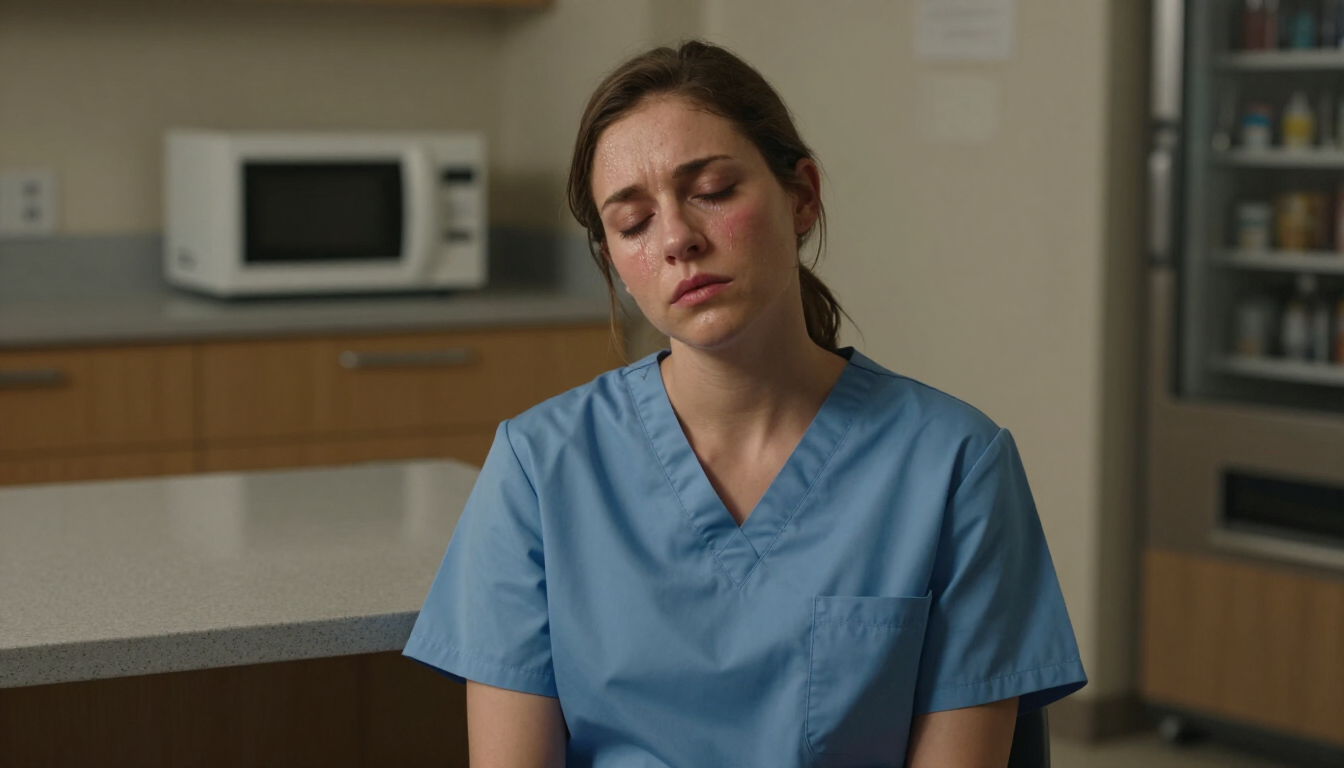
Tired healthcare worker in scrubs

The Impact of Healer-Centric Identity

For many high-achieving women in healthcare, their career isn't just a job—it’s a calling that demands total self-sacrifice. This "healer-centric" identity creates a barrier to personal wellness. When you are the pillar of strength for your patients and your family, admitting that you are tired, sick, or struggling feels like a failure.

This mindset is a primary driver of self-abandonment. You learn to ignore your body’s hunger signals during a twelve-hour shift, you suppress your need for a bathroom break, and eventually, you suppress your emotional responses to trauma. By the time you actually need medical or psychological care, your ability to tune into your own needs has been severely compromised. You become a "bad patient" because you no longer know how to listen to the patient inside yourself.

How does burnout affect our ability to receive care?

Burnout is more than just being tired; it is a physiological state of depletion. For nurses and doctors, burnout manifests as a cynical detachment—not just from the job, but from their own physical and emotional sensations. When you are in a state of chronic stress, your nervous system is stuck in "fight or flight" or, more commonly, a "freeze" state.

In this state, receiving care feels threatening. To be a patient is to be vulnerable, and for a burnt-out healthcare worker, vulnerability feels like a loss of the armor that keeps them functioning. You might find yourself:

  • Critiquing the nurse's technique to maintain a sense of superiority.
  • Downplaying your pain levels to avoid "being a bother."
  • Ignoring discharge instructions because you think you know better.
  • Feeling intense guilt for taking up a bed that "someone else needs."
  • Dissociating during consultations to avoid the reality of your illness.

These behaviors aren't just personality quirks; they are defense mechanisms. If you recognize these patterns in yourself, it may be time to explore Somatic Therapy to help reconnect with your body’s actual needs rather than your professional expectations.

The Clinical Eye and Self-Diagnosis Trap

Nurses are trained to look for the worst-case scenario. We are the masters of the "what if." While this makes us excellent at saving lives, it makes us terrible at managing our own health. When a nurse feels a lump or experiences persistent fatigue, the "clinical eye" doesn't just see a symptom; it sees a differential diagnosis list that includes the most catastrophic possibilities.

Alternatively, we go to the opposite extreme: total denial. We rationalize away symptoms that we would never let a patient ignore. We tell ourselves it’s just the stress of the unit or the lack of sleep. This internal conflict—between the expert who knows the risks and the human who is afraid to be the victim—creates a unique type of medical trauma that often requires specialized support, such as EMDR , to process.

Peaceful woman in nature

Why is boundary setting so difficult for healthcare workers?

Boundary setting is the antithesis of the "hero" narrative in nursing. From nursing school onward, we are taught that the patient comes first. While this is true in a clinical setting, many of us carry this rule into our personal lives, our friendships, and even our own recovery.

We struggle to say "no" to an extra shift, even when we are at a breaking point. We struggle to ask for help at home because we are supposed to be the ones who have it all together. This lack of boundaries is a form of self-sabotage. Without boundaries, we have no container for our own energy, leaving us perpetually leaked and exhausted. Learning to set boundaries isn't just about saying no to others; it’s about saying yes to your own survival.

Somatic Therapy: Reconnecting with Your Body

For nurses who have spent years living in their heads and ignoring their bodies, traditional talk therapy can sometimes feel insufficient. You can logically understand that you are burnt out, but your body still feels like it’s under attack. This is where Somatic Therapy for Nurses in Kelowna becomes vital.

Somatic therapy focuses on the body's internal experience. It helps you move out of the "doing" mode of nursing and into the "being" mode of healing. By focusing on breath, movement, and physical sensations, you can begin to discharge the stored trauma of your career. It allows you to stop being the "bad patient" who ignores their body and start being the person who honors it. If you’re in another region, you might look into Somatic Therapy for Nurses in Calgary or Saskatoon .

What steps can nurses take to prioritize themselves?

Breaking the cycle of being a "bad patient" requires a radical shift in perspective. You have to start treating yourself with the same clinical compassion you offer your most difficult patients. This isn't just about "self-care" in the form of bubble baths; it’s about deep, structural changes in how you relate to your profession and your personhood.

Consider these steps to begin your recovery:

  1. Acknowledge the Healer Burden: Recognize that your desire to be "the strong one" is actually a barrier to your health.
  2. Practice Micro-Boundaries: Start small by saying no to one minor request that drains your energy.
  3. Seek Specialized Support: Work with a therapist who understands the specific culture of healthcare, perhaps through Emotion Focused Individual Therapy .
  4. Listen to the Whispers: Pay attention to small physical signals—headaches, tension, digestion—before they become screams.
  5. Reclaim Your Identity: Find hobbies and passions that have nothing to do with helping, fixing, or saving anyone.

Summary: Healing the Healer

In conclusion, nurses make the worst patients not because of a lack of knowledge, but because of a surplus of self-sacrifice. The very traits that make you an incredible nurse—your vigilance, your empathy, and your tireless work ethic—are the same traits that can lead to burnout and self-abandonment if left unchecked.

True healing begins when you realize that you are worthy of care, regardless of your ability to provide it to others. Whether you are navigating the complexities of medical trauma or simply trying to find your way back to yourself after years of service, there is support available. You don't have to be the one in charge all the time. It is okay to be the patient. It is okay to be the one who is held. If you're ready to start that journey, feel free to Book a Session today and take the first step toward reclaiming your well-being.

Warm cozy therapy-adjacent room with natural light and botanical elements

Meet Melissa Milligan

Certified Canadian Counsellor - License number #112479

Registered Nurse - License Number #0929878

Melissa Milligan is a Canadian Certified Counsellor (CCC) and Registered Nurse (RN) with over 15 years of nursing experience across ER, Labour & Delivery, acute care, and day surgery. She founded Return to Self Counselling & Wellness to work with nurses, healthcare workers, and women who've built their whole identity around holding everyone else up.


Melissa draws on her nursing background alongside training in EMDR, EFIT, mind-body therapy, mindfulness, breathwork, and yoga to offer trauma-informed, nervous-system-aware care. She understands burnout and self-neglect from the inside, not just in theory, and helps clients stop abandoning their own needs and start noticing them before their body has to force the issue.

Recent Posts

High-achieving woman feeling burnout despite career success
September 9, 2026
Explore why high-achieving women and nurses feel like they're failing despite a perfect resume, and how to heal burnout through somatic therapy.
A healthcare professional practicing a 5-minute nervous system reset during a break.
September 4, 2026
Learn a 5-minute nervous system reset designed for nurses and healthcare workers. Use somatic tools to reduce burnout and manage stress during your lunch break.
Woman practicing boundaries and self-care.
September 2, 2026
Understand why you say yes when you mean no, the link to nurse burnout, and how somatic therapy can help you set boundaries and stop people-pleasing today.
An exhausted nurse taking a moment of peace in a quiet room.
August 31, 2026
Nursing burnout is more than just being tired. Learn the signs of healthcare worker burnout and how to recover with humor and professional insight.